The Weight

The Weight: Written by Robbie Robertson and originally recorded by “The Band,” thie song has been listed by Rolling Stone as one fo the top 50 “greatest songs of all time.” It has been covered by some notable artists including Aretha Franklin. Amazingly, I had never heard her version until a we saw a band cover it last week.

Thumbnail

http://www.youtube.com/watch?v=wta5GU3FNhA

Then this morning I heard it again …

The Weight

The mist pressed silence into the morning
the way the heavy quilt
had muffled the sound of the radio
drifting in from the bathroom

They had heard a band perform “The Weight”
just three nights before
and now the chorus

not The Band’s funereal march
but the soaring cries of Aretha
rolled across the room

take a load off Fanny
and three female voices spread their harmonies
take a load for free

they had argued         she had said
the lyrics made no sense
and he said it’s like a painting

the soaring voices like the rays
of sunshine just now finding
pathways through the morning fog

and as the commentator talked
and the hair dryer started behind the door
he felt her company all these years
holding him weightless and warm

Location: Our Place In The World

Last year Carol and I met a young violinist whose family lives in China, but who has lived in Los Angeles by herself since she was a teenager while pursuing advanced music studies. She has traveled the world teaching and performing, and is the inspiration for this poem.

Location

the subtle tones of the violin
maple from Croatia
and Spruce from the Black Forest
tingled her cheek in the same way

her cashmere scarf      in a fall breeze
blowing up from Puget Sound
rose to muffle startled breath
and played across her face

her home       they asked her that last night
and though she thought she said Shanghai
the New York sidewalks         LA sun
felt as real as her warm tea

her home         a metal folding chair
wedge foam cushion placed just so
back straight head back      left wrist held up
ancient wood against her chin

the slight curve of the tensioned bow
resting level with her face
marking out a graceful line
drawn anywhere in space

One Eleven Bus

Florence Avenue

The one eleven bus slices through
the layers of Los Angeles
and lays bare the sinews
and marbled muscles of her thighs

City Bus Center
Inglewood Crenshaw
Western and Vermont
Normandy acid
of anger and hate
etched into the intersection
Broadway and Avalon
Central Avenue

Central Avenue
The black South
come to work the heavy metal
of the booming Southland
And live to sounds of
Big Joe Turner
Lionel Hampton
Central Avenue Breakdown
drifting from the
now quiet Dunbar Hotel

Alameda Santa Fe
Pacific Boulevard

an artery swelling
with the post war
white blue collar
California Dream
then collapsing with
the shuttered factories and
boarded up store fronts

to fill again with
vibrant multi colored
horns and guitarrons
spices and sweet language of
the fruit of the Americas

On through Downey
and finally Norwalk
as the tides of people
move around the globe
and beneath the asphalt
the earth shifts

Take the Metro Green Line

for the return trip

Orono Calling

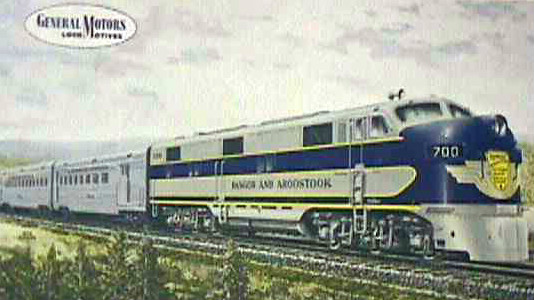
The Bangor and Aroostook Railroad passed right through the little town of Orono, Maine, located on the west bank of the Penobscot River. The only passenger train passed through this quit grade crossing at 3 AM every night.
 
  
Orono Calling

Three AM        Orono calling
Sleek locomotive leads silver train
Past sleepy unmarked railroad crossings
Deep in the woods of central Maine

Sleek locomotive leads silver train
Two heads poke out of a back yard tent
Deep in the woods of central Maine
Up to the Pine Street crossing they went

Two heads poke out of their back yard tent
Barefoot they run in the late night dank
Up to the Pine Street crossing they went
To sit and wait on the railway bank

Barefoot running in the late night dank
White light moves on a distant hill
Sitting close up on the railway bank
They hear the whistle long and shrill

White light moves on a distant hill
A rush round the bend and then it is here
The whistle loud now       long and shrill
The thrill of the sound and the pounding fear

A rush round the bend and then it is here
The flying Southbound passenger train
The thrill of the sound and the pounding fear
At this small rail crossing in central Maine

The flying Southbound passenger train
Lifts from the tracks and leaves behind
The small rail crossing in central Maine
And dissolves to smoke down the trails of time

Weeds grow in the rail beds left behind
As midnight passes in fitful daze
The silver train flying the trails of time
Roars through the dark city’s neon haze

As midnight passes in fitful daze
Sleek Locomotive pounds in the night
Awake in my dream-like neon haze
White light splashes from single head light

Sleek Locomotive pounds in the night
My room is the overgrown railroad crossing
Windows explode from passing head lights
Three AM       Orono calling


F3 Locomotive Leads Bangor and Aroostook Passenger Train


for Phil

He leaned back
Arms by side
His shoulders straight
And sang.    He felt
The power of his voice
Anchored by his
Rock-like pose
His energy
And  (say it)  joy
Belting long strong notes
In front of the good
But rag-tag band
The joy of being
After all the drugs
The joy of singing
After not quite catching
The peak of the punk wave
The joy of living
After not achieving
The Fame of ‘X’ or Patti Smith
The joy of friends to hug him
After decades in the dark
The joy of the
Old time
Ragtime
Washboard rhythm song
The joy of the bass
The fiddle
And his voice
His own voice
Soaring and alive

1961: Stanley Ann and Me

                                                                                              Carol Kearns
                                                                                              September 2012

It’s hard to believe that four years have already passed since President Obama first ran for office in 2008. I was so proud when the Democratic Party made him its nominee, and prouder still of my country when he was elected to office as the better candidate.

The President’s most strident political enemies deride his background as a community activist and claim that he is a socialist. Others assert that he is a closet Muslim, born outside the country.

But there is one issue that is thankfully avoided in public discussion as completely inappropriate – and that is the very young age of the President’s mother when he was conceived and born, and whether or not she was really married. Even President Obama, in his book Dreams from My Father, says that “how and when the marriage occurred remains a bit murky.”

I think quite a bit about Obama’s mother, Stanley Ann Dunham, later known as Ann Dunham, because she was born only three years before me, and this makes her part of my generation. When I think of her, I see myself. President Obama is young enough to be my son, and he was born during tumultuous times that I remember very well.

I also think often about the president’s grandparents, Madelyn and Stanley Dunham, because they stood by their high-spirited teenager and embraced a multi-ethnic family at a time when many parents would not have.

When someone mentions the 1950’s and 60’s, most of us usually recall fun things like American Bandstand, Elvis, and the Beatles. But in 1961, when President Obama was born, it was still a felony in many states for mixed race couples to marry, and the growing challenges to segregation in the south were being answered with considerable violence.

Obama’s grandparents moved to Hawaii with their daughter in 1960 after she finished high school in Seattle. Ann Dunham was known for her enthusiasm and curiosity about life, and shortly after entering college, she was swept off her feet by a 23-year-old Muslim student from Kenya. She was only 18 when her son Barack was born, six months after her marriage to his father in February.

Ann’s experience of falling in love and having to get married was typical for many young women; but to me, the staunch support of her parents during that socially repressive time is quite unusual. The social stigma of an unwed pregnancy, and especially for babies of mixed race, induced considerable fear for all involved.

How many girls were sent away to deliver a baby, to fabricate a husband, or to put the child up for adoption? Whenever my own mother heard of such stories, she would warn me, “Girls who get pregnant are ruining their lives.”

Ann was blessed to have the parents that she did. Even in the island paradise, there was considerable animosity among the various ethnic and racial groups; yet Ann’s parents stood by her and her son. Nine years later they embraced a second grandchild, a girl, whose father was Indonesian.

In August 1961, when President Obama was born, I was one month shy of my sixteenth birthday – ready to start tenth grade and get my driver’s license. The country was struggling with Jim Crow laws, with the fallout from rock and roll, with the burgeoning feminist and free-speech movements, and with the over-all challenge by the baby boomer generation to the stultifying political conservatism and McCarthyism of the 1950’s.

Civil rights activists pressed harder for the country to live up to the principle “all men are created equal.” As I watched the nightly news with my parents, or read the headlines, I saw people staging non-violent sit-ins at segregated lunch counters, and people traveling south (and dying) to help with voter registration drives. There were even demonstrations in San Diego, and an older friend from school spent a weekend in jail. Some of the worst for the country was yet to come.

In September of 1963, when Obama was just two years old, Governor Wallace of Alabama defied a court order admitting black children to a public school in Huntsville. A week later, four children were killed in the bombing of the Baptist Church in Birmingham. Secretary of State Condoleeza Rice was a little girl in Birmingham and knew those children.

Most people I knew supported integrated public facilities, but many still had trouble with mixed marriages. I remember a negative discussion of such marriages by fellow students in college.

President Obama chose to remain with his grandparents and finish high school when his mother went to live with her second husband in Indonesia. It is understandable that he felt he had much to sort out as he grew into manhood.

I also think about Ann Dunham at the time of her death in 1995. She wasn’t even 53. This was the year I turned 50, and I had just started my second year of teaching. Ann Dunham died so young, but she also packed a great deal of living into her short time here. She probably had no clue that she was mother to a future president.

Times are much different now than when Obama was born fifty years ago. Who could have imagined that in 2008 the vice-presidential Republican candidate would present her pregnant, unmarried daughter to the national convention.

We have come a long way, and I hope that as a country we don’t go backward. No matter what people may think of the President’s politics, do they see any of themselves when they consider his personal story? I see his mother as a young girl and I remember the country’s turbulence during my adolescence, and I hope we continue to work toward what is right.
The Crows are Back

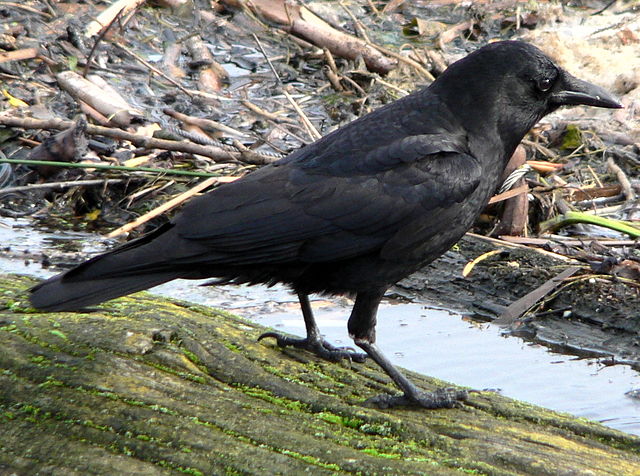
The crows are back. They haven’t been here in years. Some say it was the bird flue that got them, but whatever is was we were happy without them. This year, however, they returned, and we were not happy to see a half-dozen of them on the front lawn, pecking away. Not that I don’t like birds: we have a number of sparrows and things flying around the yards, and I keep a feeder out back for the smaller ones.

But crows are different. I go out front to get the paper at 5:30 in the morning, and the crow walks slowly to the opposite side of the yard, with the insolent eye of the gangster.

“Sure, mister, I’ll get out of your way. But I’m keeping my eye on you.”

The crow cries sharp

                      insistently

The flock lights in a nearby tree

                       and plots indignities

                                            on nearby outdoor diners

The crow is not the lowland farmer

                      faithfully turning the field with his spade

but the Norse chief standing

                      in the prow of the raider boat

the crew carefully shipping the oars

                      and readying the swords and lances

Crow photo: http://en.wikipedia.org/wiki/File:Corvus_brachyrhynchos_30196.JPG
Licensed under the Creative Commons Attribution-Share Alike 3.0 Unported license.

The Dream Away Lodge: the Obsession Continues

I’ve continued my obsession with the Dream Away Lodge with this little song. My song writing career is hampered by a complete inability to sing, but hey … I don’t let that stop me! Here are my lyrics to “Dream Away Lodge”. I’m searching for the right music … I envision it as a slow waltz …

Feel free to contribute to music and/or lyrics. If chosen, we’ll split the writing credits when it hits the big time 🙂

Dream Away Lodge

(Chorus)
Follow the ghost of the Albany stage
As it climbs through the late evening fog
Swaying it’s way through the old Berkshire hills
Up to the Dream Away Lodge

Gray haired musicians play pining love songs
Diners talk while friends laugh at the bar
Children chase fire flies out on the lawn
In the glow of the dream away lodge

Chorus

History and mystery are these towns’ stock in trade
It’s the tourists that pay all the bills
When the Tanglewood crowd has returned to New York
The fiddles float soft through the hills

The roads of the Berkshires are paths through an ocean
Darkness starts thirty feet from the road
The hearts of the people are warmed by the flowers
And tied to the earth by their grandparents stones

Chorus

Dog Walking

The simplest things can bring such pleasure. For us walking the dog is a way to connect with our neighborhood and ourselves.

Dog walking

We’re talking
Tail Wagging
No Squawking

Legs moving
Smelly bagging
Speed improving
No nagging

Morning greeting
Asphalt heating
Wet grass breathing
Neighbor meeting

Hips rocking
We’re talking
Tail wagging
Dog walking

The DreamAway Lodge

Neon in the night

We took a lot of pictures on our trip, but there are some places that you feel would be almost sacrilegious to photograph. That is the way I felt about the DreamAway lodge.

The old county road is a narrow lane heading steeply up October Mountain, in the middle of a vast sea of the green forests of the Berkshire Mountains in western Massachusetts. These mountains are low and soft, rounded at the top, more like hills for those used to the towering steep mountains of the Rockies or the Sierras. Travelling through these hills, though, is like swimming under water in a murky pond. The thick mixed woods close in on every road, and what few vistas there are reveal no distinct landmarks to provide orientation: only a rolling ocean of undulating green.

The climb up the mountain seems endless. As the road curves back and forth, the shadows of late afternoon cover the road and steep the forest in a dark cloak, rich with the scent of broad leaf trees, thick with the oxygen of rich air, and heavy with mysteries that lie in the miles of woods.

Suddenly the road opens up to a clearing, ringed by a wall of trees, and there at the top is the DreamAway Lodge.

children barefoot in the grass
young lovers huddling on the edge of illumination
from the white light of windows
and the green and blue of a neon sign

innocence and age
untrained teenage waiters
the song of the soft guitar
the foot fall of ancient innkeepers

old pony-tailed musicians come back
to find missing pieces of their soul
while toddlers chase fireflies in the island of light
as night settles in on October Mountain