Road Work

This morning my office van-pool slowed
and as we passed an impressive large hole,
three men leaned on their shovels
and contemplated the beauty of their work.

Hail to you, road workers,
gathered in the morning mist,
hard hats, jeans and scarred leather boots,
hoodie jackets and florescent vests

circled behind orange cones,
insulated coffee mugs in hand,
oblivious to the passing glances
of young women in BMWs.

Stuff, what wonderful stuff you have,
dump trucks full of asphalt and sand,
shovels and jackhammers, picks and bars
metal to be hoisted and swung all day.

Oh you, the prince of the backhoe,
your levers control the mighty arm
with the scoop that lays bare
layers of tortured rock and macadam,

And hail to you, king of the ponderous roller
regal barge moving massive and slow,
giant cylinders steaming over still soft road,
and you sitting motionless high in the seat.

© Frank Kearns 2014

Jawbone Siphon Song


Jawbone Siphon Song                 

                                         “There it is. Take it.” William Mulholland

Bart drove Sarah up Three Ninety Five
then North away from the two lane blacktop
on the unmarked graded road

to where steel pipe as wide as an automobile
bends up eight hundred fifty feet
a giant “V” carved on canyon walls

They stood on the warm steel in the sun
and felt the heat work into their shoes
felt the vibrations under their feet

and heard the Jawbone Canyon Siphon’s
hum         almost inaudible above
the desert sounds and silences.

Bart talked cubic feet per second
incompressible fluid and the pressure
of a column of water towering high

and Sarah listened        but listened too
to the song from inside the arched metal tube
as the water raced passed hoop joints and rivets

echoes of flowers in Onion Valley
and trickles from glaciers nestled in
the granite slopes of the Palisades

she heard the scratchy resonance
of dried out fields      sold-out farms
and the whisper of men at the spillway gates

and a mantra of names
Eaton Mulholland Lippincott
Otis San Fernando Los Angeles

a chant repeated by the wind
as it picked up the salt and sand
from the dry brown bed of Owens lake

to twirl across the empty flats
and sift through the shells of windows and doors
in the broken-down sheds of Olancha

Copyright © Frank Kearns 2014


The Pump House


The Pump House

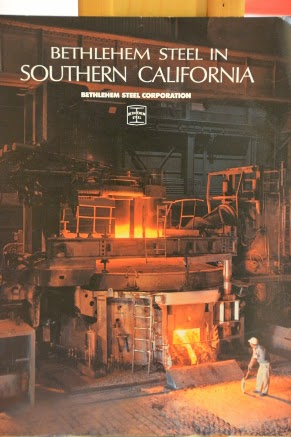
Bethlehem Steel was my war, my trial by fire, or whatever other phrase you want to use to describe the searing, testing experience of a young man that shapes him and gives him the confidence to stand up in this world.
I had remembered the dark feel of the place, dusty gray-brown under giant sheet metal bays two hundred feet wide that ran for a quarter mile. I could hear the rattle of the overhead cranes running along tracks high up in the bay, hear the clatter of table-sized magnets dropping long steel billets onto the cooling beds, and feel the thunder of the electric furnaces roaring through the night as one hundred tons of scrap steel melted to the torture of the electric current.
I remembered how we blocked out the fear as we stood in a pit to position long gear casings; reaching up to guide them as they came down swinging, being lowered too fast into the confining hole by a drunk crane operator. I could feel the metal as I straddled the crane rail fifty feet off the ground, reaching under the trolley to grease the railroad-car sized wheel bearings. And I can still feel the tingle in my leg as I rested my heavy boot on a bar running low beside the beam, which I later learned was the hot rail for the crane’s electric motors, 220 volts of direct current fed by room-sized generators, and I can see my lead-man’s face turning pale in an instant when I told him about it.
But what I had forgotten was the pump house, nearly a year spent off the rotating mill as the plant started to die and they cut back crews, a year of working days by myself, fixing the tall water pumps that were wearing out like everything else, taking apart two to try to make one that would continue to pump the cooling water that kept the searing heat from melting the machines.
How they were lonely days, left to my own devices, mind massaged by talk radio, trying to make usefulness from junk, trying to make sense out of the world and keep the dying plant alive, a year of watching the slow death of something way bigger than myself.
© Frank Kearns 2014

Modesta Avila


Modesta Avila
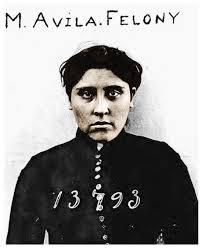
     First felon of Orange County – 1889

Thin columns of rising smoke
trace the mesh of railroad racks
out across the scrub and farms
of the ranchos of Southern California.

Stubby black engines pulling
cattle hides and oranges
spurt rhythmic blasts of exhausted steam
and startle the jackrabbits

in a mundane daily working way,
as if the sleepy donkey carts
of the land-rich Californios
had last rolled centuries ago.

Modesta’s teenage eyes flare out,
steady in the booking photo;
her crime       she dared to string her laundry
across the Southern Pacific tracks,

an eighteen year old       Mexican,
upturned by the shifting tide,
tired of the incessant grunt
of indifferent locomotives

sealing her childhood beneath the rails,
unable to see a world beyond,
a woman knowing no way to stop
the hard steel wheels of the passing trains,

willing to lose the sunsets
glowing orange in the ocean air,
or trade the sight of butterflies
drifting from fresh spring grass,

or       rage welling in her neck,
nothing more than wanting,
wanting just one chance to say
this land        it was my father’s.

Frank Kearns 2014

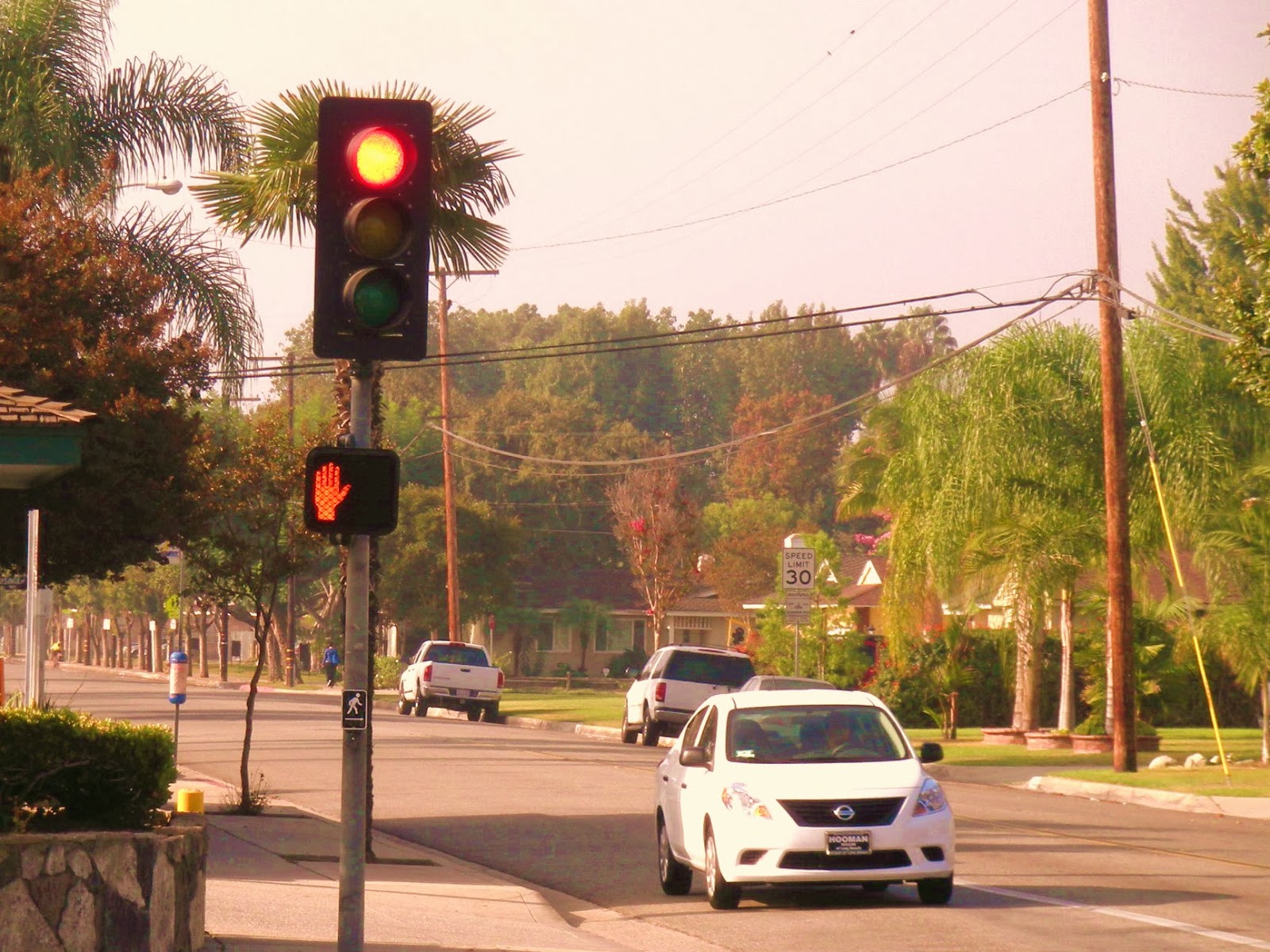
The Walk Light at Rives Avenue

The Walk Light at Rives Avenue
 seems to take forever to come on.
Cars come down Florence quick and constant,
flowing as an un-swimmable mass
of blurry colors and blinding chrome.
A man on a rusty bicycle stops
and sets his feet on the concrete walk;
plastic bags full of empty cans
sway back and forth on the handle bars.
On the far side a woman in running shoes
leans against the stop light pole,
presses the metal button once,
and pushes back in a long slow stretch.
We have come to a stop at anywhere,
like townspeople frozen on a page
of a yellowed hardbound picture book,
on a city street between world wars,
waiting for the drawbridge to set down,
sharing in casual nod and glance,
this momentary intersection
of unconnected lives,
or travelers bound together,
by a pause on an ancient river bank,
the ferry still at the opposite shore,
the river moving fast in deep mid stream.

Meditation On 1963

First pangs  of passion for a girl
first twinge of trouble in my world
first view of fabric always tearing
and scabbing back on ancient seams
John F Kennedy shot dead
as we sat silent in our classroom
and Pope John the Twenty Third
a light for searching Catholic youth
dead before the sparks of hope
could light a warming fire
While out in California
Pat Brown’s housing legislation
is opposed by most state senators
and up and coming Ronald Reagan
Say what you will about smoke-filled rooms
Jesse Unruh strong-armed them
beat them all into submission
and passed the radical legislation
banning housing discrimination
For every healing mend a rend
Ah             the greatest generation
and real estate associations
who pushed a state wide proposition
to kill the ban on discrimination
The voters passed it
                                                two to one
and three years later
                                                Brown was done
defeated by the hero

                                                Ronald Reagan


Cupcake and Lace

Carol Kearns’ Cupcake spy stories were inspired by the Cupcake character in Reflections on Espionage, by John Hollander

——————————————————

Cupcake and Lace
     by Carol Kearns

            Cupcake checked her messages and noted Weber’s time of arrival.  Then she sat down to prepare her pictures for Instagram.  This week a picture of crepes meant a meeting after breakfast, 10 AM; a picture of a pizza said meet after lunch, 3 PM; and a picture of sushi said meet after dinner, 9 PM.  If she applied a red filter, it meant a quarter after the hour; if the filter was blue, it meant half-past; and if the filter was green, it meant forty-five minutes after the hour.
            The pictures of food were always accompanied by “sightseeing” shots:  at least three pictures of public landmarks or famous buildings, and somewhere in the middle of the series, a picture of the structure across the street from the actual meeting place.  This week she saw that the Agency had created 130 followers on Instagram on for her. 
            A call from the boutique came just after she posted her final picture. 
            “Cherie,” said a feminine voice.  “Your order has just arrived.  The Belgian lace is beautiful.  Would you like to come for it now?”
            What?  This was not in the plans.  Giselle was one of their most reliable contacts.  But Belgian lace was the code for come now.  It must be important.  Cupcake put her gun in her purse.
            Ten minutes later, when she entered the shop, she saw Giselle arranging a new display of intimate apparel.  A husky man with graying hair was near the window, casually browsing through silk kimonos
            Giselle looked up as Cupcake approached.  “Bonjour, Cherie,” she said, but her eyes revealed anxiety as she glanced at the male customer.  He now held a gun and was walking toward them.
            “Alright, you two, close up shop and head for the back.”  He motioned with his gun for Giselle to lock the door and put out the Closed sign.
            “Who are you?” demanded Cupcake.  “Is this a robbery?” 
            “Don’t make me laugh, Cupcake!  Yes, I know your name.  And don’t pretend that you don’t know me.”
            “I don’t know what you’re talking about,” she insisted.
            “Yes you do; you call me Lucifer in your reports.”
            Cupcake’s face remained a mask; she would not give him the satisfaction of a confirmation.  
“Get moving I said.  We’ll have plenty of time to talk in the back.” But before Giselle could move, a customer came in, nicely dressed in a sport coat and slacks.
“Hello,” he boomed, his voice projecting too loudly as he closed the door just a little harder than necessary.  “My girlfriend told me that she loves your shop, and I want to get her something special for our first month’s anniversary.”  He was moving briskly around the displays, touching everything, smiling as he examined the delicate clothing. 
            The husky man slipped his gun back into his pocket. “Monsieur, Madam was just closing up.  We have a business meeting.”
            “Lavender is her favorite color,” the customer continued, oblivious to the tense body language of the three people already there.  “Of course, I think she looks great in red.”
            Suddenly he sneezed.  “Sorry,” he said, “I’m allergic to some perfumes.  Is someone wearing Tabu?” and this time he sneezed quite violently, falling against the man with the hidden gun.
            Seeing her enemy stumble, Cupcake was on him in a flash.  She kicked him hard on his backside before he could straighten up and sent him sprawling amid the brassieres.
            Giselle sprang to the phone to call the police, and the loud, clumsy stranger was now direct and efficient as he put a knee to the man’s back and applied his thumb to a pressure point on the neck.  The man they knew to be Lucifer stopped struggling and went limp.
            “Weber, what are you doing here?” demanded Cupcake of the man who had just come to her aid.  “Control said you weren’t arriving until tonight”
            “I’m supposed to be here now,” he replied, as he searched Lucifer’s pockets and found the gun.  “You sent a picture of French fries with a blue tint – after breakfast, 10:15.  Good thing I saw what was happening through the window.”  

            “That was last week’s code,” Cupcake said with a sigh.  “You do good work, Weber, but I think you need another day of training with this app.”

—————————–

Carol Kearns’ Cupcake short stories are inspired by the Cupcake character in Reflections on Espionage, by John Hollander
Making a City

One summer August when I was about twelve, my brother and I embarked on a grand undertaking. We decided, in a dusty second floor room in the abandoned shed attached to our old farm house, to build a civilization. We had a large flat space. We had paper and glue. And we had, wonder of wonders, access to my father’s office mimeograph machine. On a grid, maybe four feet by four feet, we laid it all out: main street, side streets, houses, yards, shops.

I think of this, standing under the sun outside my office building, looking across the parking lot, across the boulevard, to the blue sky above the strip mall restaurants. A grid city, laid out and planned with restaurants here and a gas station there, patterns repeated over and over beneath the glare of a nine zillion watt light bulb.

There is Sweetie Thai, with white table cloths, tea lite candles, thin waitresses moving in the dimness of the dining room away from the glow of the windows. Carl’s Junior. One of a thousand in Orange County, and the California Fish Grill, where every Tuesdays fish tacos are half price. Every Tuesday one of the ladies asks around the office. She collects the orders and makes the call, and then we walk across the street, talking of home repair and children. The smell of some exotic oil on a hot pan floats from Sweetie Thai. Inside the California Fish Grill, the noise of clanking spatulas and the sizzle of batter are background for the chatter and laughter of a hundred people jostling around the island filled with pots of salsas and cilantro.

In that dusty room we placed the people, two types of men and two types of woman, a boy and a girl, several hundred copies run off on the mimeograph. We had cars, complex folds and strategic spots of glue placed after cutting along the blue lines duplicated on a pile of paper. There was a bank, with lots of tiny money, and a restaurant and a factory where the cars were made, a couple of folded houses and a restaurant, which we thought was really pretty close to everything that we needed to complete our little world.

It all lay silent as the next school year started and dust filtered in through the shed. And now, as I stand on the concrete side walk, press the metal button and wait for the walk light, I think about this rolled out city under the sun, and realize that in my long lost little world, I didn’t know about the sizzle of batter, the smell of fried shrimp floating across lanes of asphalt, and the lady who gets up from her desk about eleven every Tuesday to collect the fish taco order.

Desert Roads

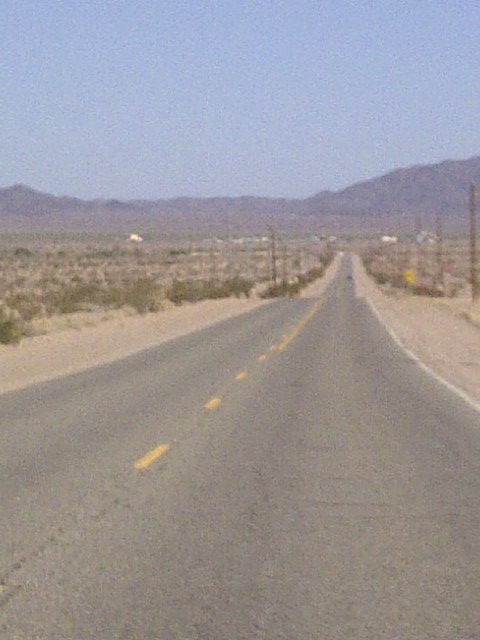
The baking two lane blacktop stretches
to a point on the still horizon

where progress toward the distant mountains
is imperceptible at speed

In a trick of lazy geometry
on-coming trucks don’t seem to rush

they just grow slowly larger
then pass in a blast of turbulence

No curves from here to a far off rise
miles of scrub and ocotillo

hawks and silent emptiness
of a single cabin by a wash

and the crosses and dried flowers
that mark passing of miles and time

Orange County Intersection

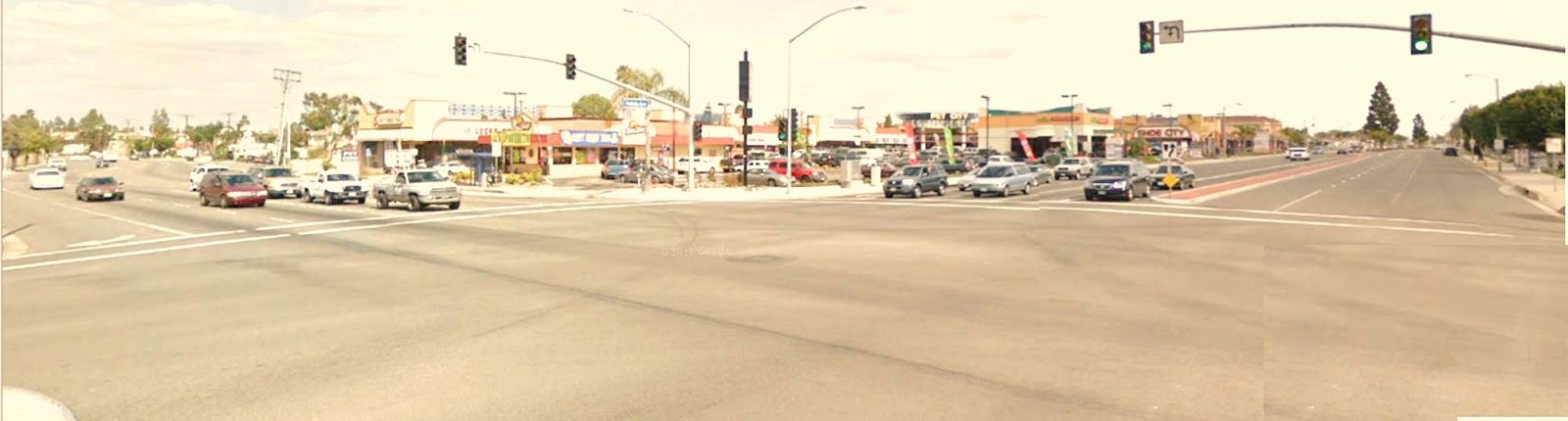
I’m standing on the corner of Valley View and Cerritos Boulevard waiting to cross at the light. I’m thinking about poetry, and the magic that I find in Robert Hass, and wondering what twists and turns of imagination and real events led to something like January. I’m thinking about how alone I felt in the park just a few blocks away, by myself at a picnic table, in the shade of a tree, and how even the school next door was silent with the children inside after recess, and how the small birds picking at the nearby hedge spend their whole life like this, under the sun, surrounded by green and far away noises.

And I’m wondering how a poet describes this intersection, almost a field of asphalt baking in the sun, the way the cars flow through and split off in smooth streams like the red blood cells flowing endless through an artery. The subtle lean of the oncoming cars, sweeping in an arc from the left turn lane that brings their heading right at me before the steady hand below the face maintains the angle of the wheel, and molecules of tire and roller bearing keep their anonymous separation from asphalt and steel spindle and the car completes its quarter circle passage three good steps in front of me. How alone the electron, the vibrating carbon atom caught in a tangled petroleum web forming the stage for this long dance.

black rubber
tire tread
asphalt rough
sun cooking
tire carcass
twists and rolls
contact patch
shape distorting
air pressure
wheel bearings
suspension struts
inside spring
relaxes as
steel body sways
away from the arc
of turn

and we control
all of this
with a certain
nonchalance
inches away
from curb and
waiting pedestrian
who thinks how
the four lane flow
splits streams of cars
into three forks
constant globs
some here
some there
like movies of
blood cells streaming
from an artery
into separate veins

meanwhile asphalt
sticky, black
Valley Boulevard
under hot sun
becoming soft
tires mainly
synthetic rubber
a polymer
elastomer
synthesized
from petro-
leum products
come to life
again
for one more dance